
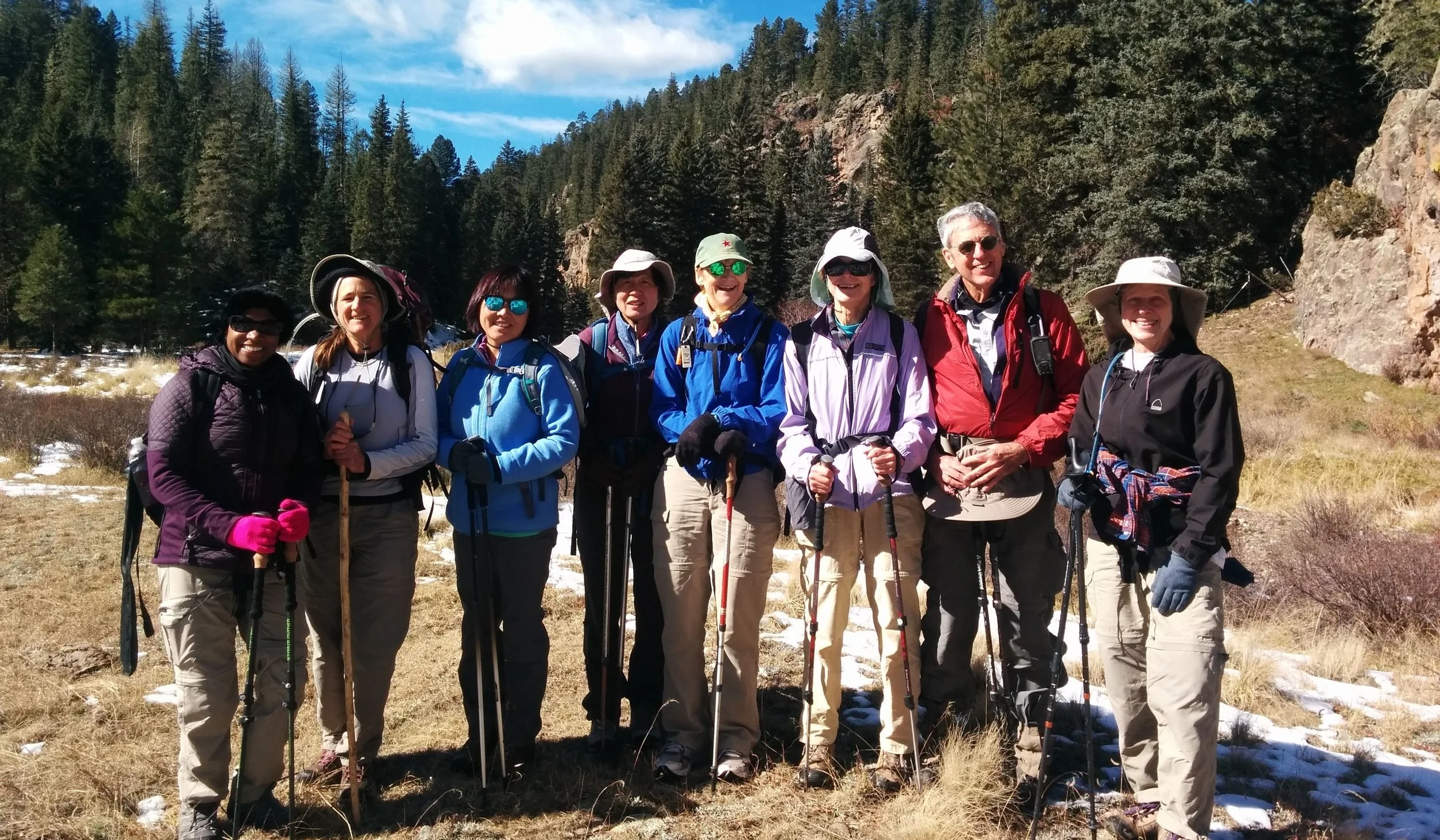
Become A Hike Trip Leader
The Hike Section Leader mentoring process is designed to support members who are interested in leading club events. Through one-on-one mentorship with experienced Hike Leaders, participants learn the expectations, skills, and best practices needed to safely lead events for the Club. This process helps ensure consistent leadership standards while welcoming new leaders into a supportive community.
How to Become a Hike Section Leader
First, be an active participant in the Hike Section before becoming a leader yourself. You should participate in at least three Hike Section events, preferably with different Trip Leaders.
Read the Hike Section Policies & Practices.
Express your interest to an existing Trip Leader and schedule a time to talk, formally or informally, about what’s involved in leading trips for the Club.
Complete the Hike Section Leader Application.
All Club Leaders are encouraged to have and reference one or all of the following leadership manuals to understand best practices for managing your events.
Appalachian Mountain Club Guide to Outdoor Leadership (available in our Club library)
Next, the Outings Chair will help match you with a mentor, or you may choose one from our active Trip Leaders. Once paired, you’ll plan and hike a minimum of three events together while completing the checklist. You and your mentor may also decide to post additional events together.
Download the Hike Section Leader Orientation Checklist.
After each event, you and your mentor will critique how the event transpired, discussing possible changes to the posting, trail communication, weather considerations, incidents, and more.
Once you and your mentor are confident that you understand the leadership processes and have demonstrated safe, courteous, and positive group dynamics on the trail, your role will be changed to “Event Organizer” on Meetup.com (our event management tool), and you may begin posting events. To remain an active leader, you are expected to lead a minimum of three events per year; co-leading counts as one-half of an event.
Important Reminders
Leaders may exclude participants due to inadequate qualifications or experience, insufficient skills or equipment, capacity limitations, previously demonstrated incompatibility, unsafe actions, or inappropriate behavior.
Leaders must never require participants to attempt any activity beyond their ability. Participant safety and well-being must always take priority over goals or completion of the event, and leaders must be prepared to cancel an event if conditions warrant.
Leaders must communicate clearly, concisely, and completely in all communications with participants.
Leaders must set and maintain an appropriate pace for the group that aligns with the event description. A slower pace may be necessary at times, particularly if group management or safety is being compromised.
At its discretion, NMMC may rescind or limit leadership status in response to code of conduct violations or a failure to exercise appropriate leadership judgment that affects the physical or emotional safety of participants during events.
Hike Classification System
All leaders must be familiar with our hike classification system and assign an appropriate classification to each outing. You should know the trail or area before leading a hike in order to classify it accurately. Use the following to give your event a class rating. To ensure safety and a positive experience, the Board may suggest that a leader hold off on posting an outing until the Trip Leader is adequately prepared.
CLASS 1: Slow pace, usually on trail, 1-1.5 miles/hour moving pace; less than 1,000 feet elevation gain
CLASS 1+: Moderate pace, 2 miles/hour or less moving pace; less than 1,000 feet elevation gain
CLASS 2-: Moderate pace, 2 miles/hour or less moving pace; 1,000-2,000 feet elevation gain
CLASS 2: Moderate pace, 2-2.5 miles/hour moving pace; 1,000-2,000 feet elevation gain
CLASS 2+: Brisk pace, 2-3 miles/hour moving pace; and/or 2,000-3,000 feet elevation gain
CLASS 3: Brisk pace or faster, 2-3 miles/hour moving pace; and/or greater than 3,000 feet elevation gain; Leaders may choose this designation at their discretion if trip has unusual difficulties.
CLASS 3+: Arduous day hikes and backpacks, requiring excellent physical condition, i.e. a 12-hour day climbing peaks over 14,000 feet above sea level.
CLASS 4: Mountaineering trip requiring use of ice axe and crampons or roping up for protection. Leaders must have a club technical climb rating. Leaders may require participants to also be rated for technical climbing or have comparable experience.
EXPLORATORY (E): In addition to a class rating, a trip may be designated as exploratory. This indicates that the leader is uncertain about some aspect of the proposed route. Participants should be prepared to be flexible and adapt to unexpected conditions.